Friday 4th November 2022
I know I said we don’t usually do breakfast, but Hoi An has some famous Bahn mi places and Bahn mi is traditionally a breakfast food. We love Bahn mi, so obviously had to make an exception!
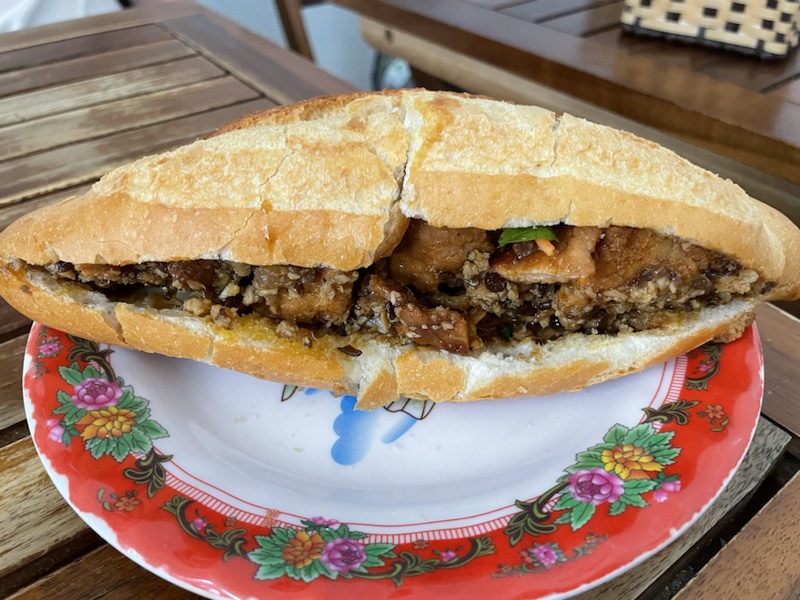
There are 2 famous Bahn mi places in Hoi An, and after extensive research we settled on Madam Khanh. We got up early and ordered a Grab car to take us straight there, about a 45 min drive and £11. With much anticipation, we ordered the bbq Bahn mi. It was good (very good in fact) but didn’t quite match up to the top runners in Ho Chi Minh City. The flavour was spot on, but the bread wasn’t as soft and fluffy on the inside as we’d come to expect (definitely not dry, but drier than the best ones we’d had).
We shared one between us, partly because we were already semi thinking about checking out the second contender for best Hoi An Bahn mi.
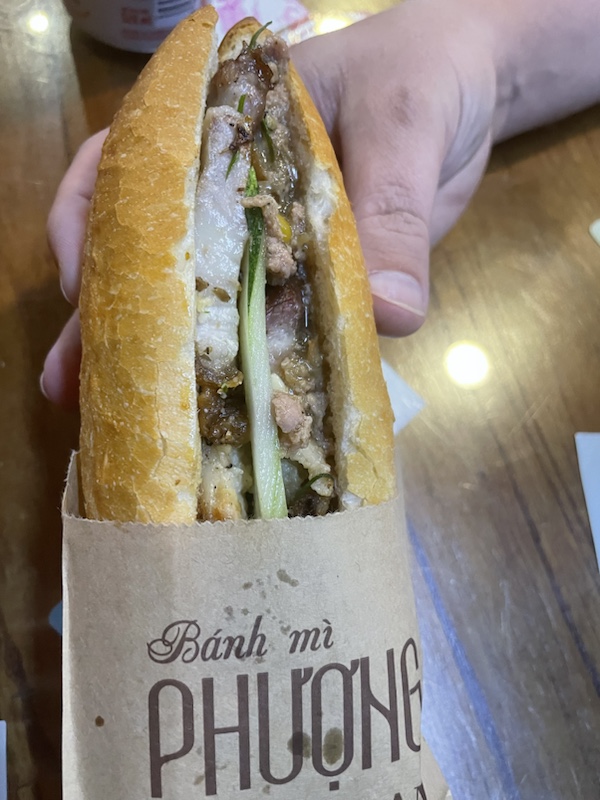
As Madam Khanh wasn’t a clear winner, we walked a few minutes to Bánh Mì Phượng so we could compare the two. This time we ordered grilled pork, again one to share between us.
We had high expectations but were a little disappointed. The flavour just wasn’t good as Madam Khanh and the pork was more fatty. The bread was similar – dryer and not as soft and fluffy as some others we’d had (but that could be the style here, as we also noticed the Bahn mi are more pointy at the ends rather than the rounded ones we’d had further south).
Whilst walking the short distance between Madam Khanh and Bánh Mì Phượng (which literally took 2 minutes!) we were accosted by two separate women, each trying to convince us to go into their tailor shops. Another three appeared by the time we got to the old town. It’s definitely tourist central here!
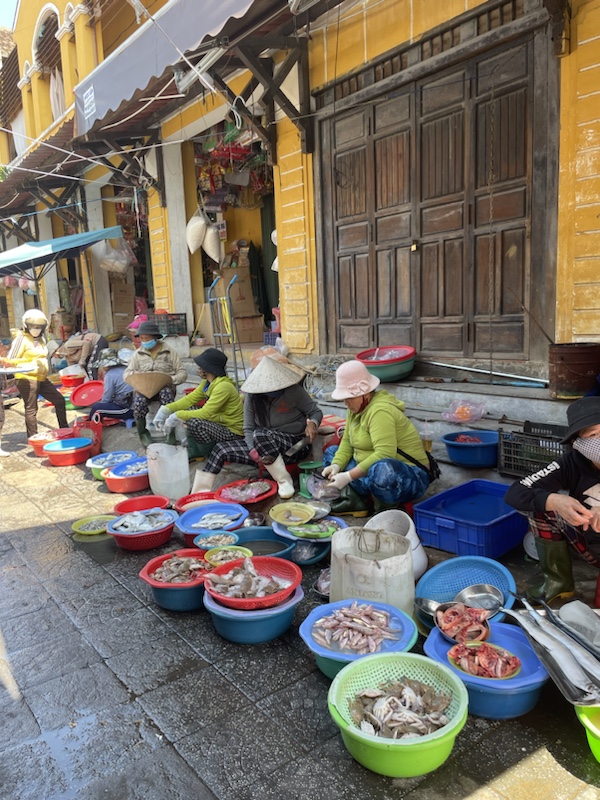
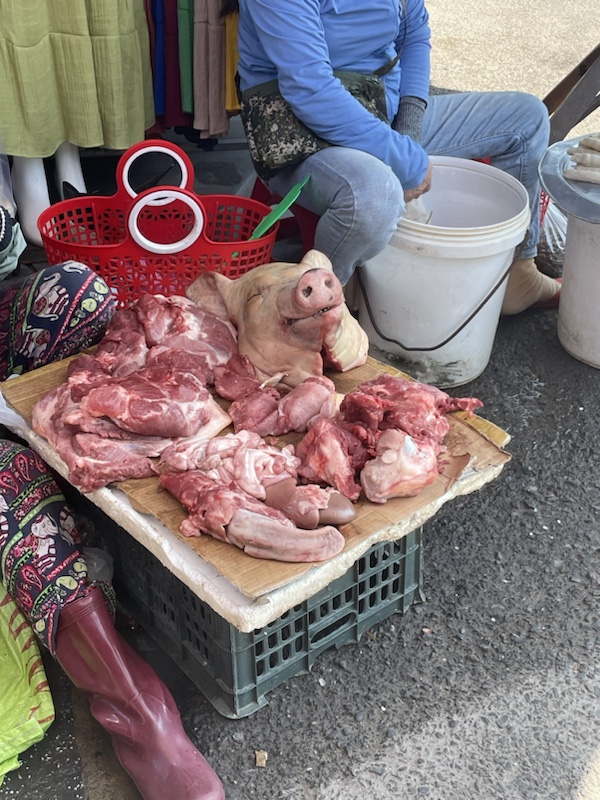
By the old town is a decent sized market, and it was interesting having a wander through. I definitely preferred the food stalls to the clothing and goods. For a start, I just find it more interesting, and secondly they leave you to browse in peace (by contrast, we couldn’t walk very close to the clothing stalls without loud cries of “come and look inside”, “very good price” etc).
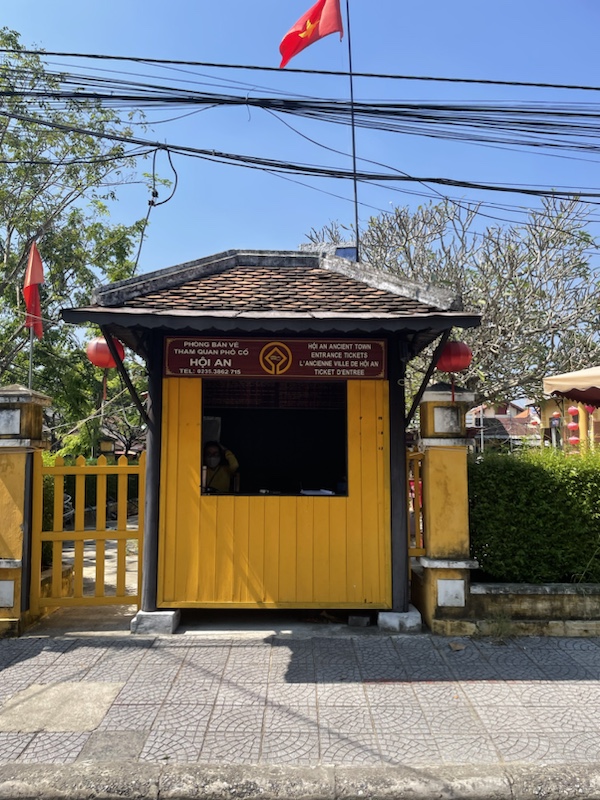
To go into any of the old buildings or museums in Hoi An you have to buy a ticket at a centralised ticket office. The ticket cost 60,000 VND (about £2) and granted us entry to any 5 sights. It took us a little while to find a ticket counter, we eventually found one on the same road as Bánh Mì Phượng (we should have walked in the other direction!), directly opposite Vegetarian Banh Mi Chay. We later discovered there are quite a few of them dispersed around Hoi An.
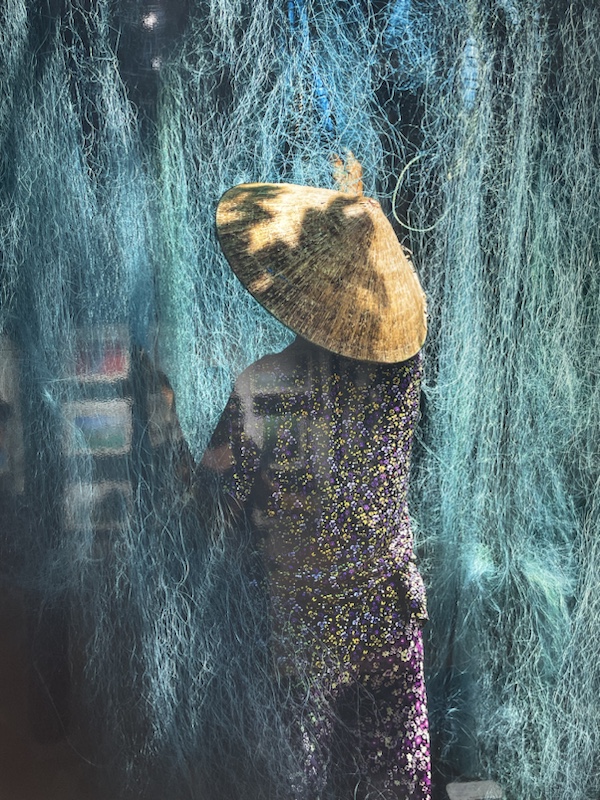
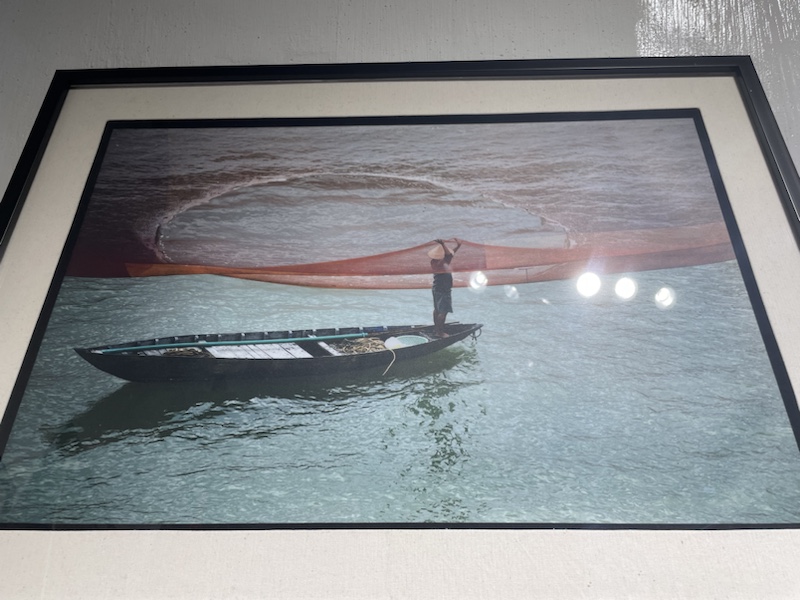
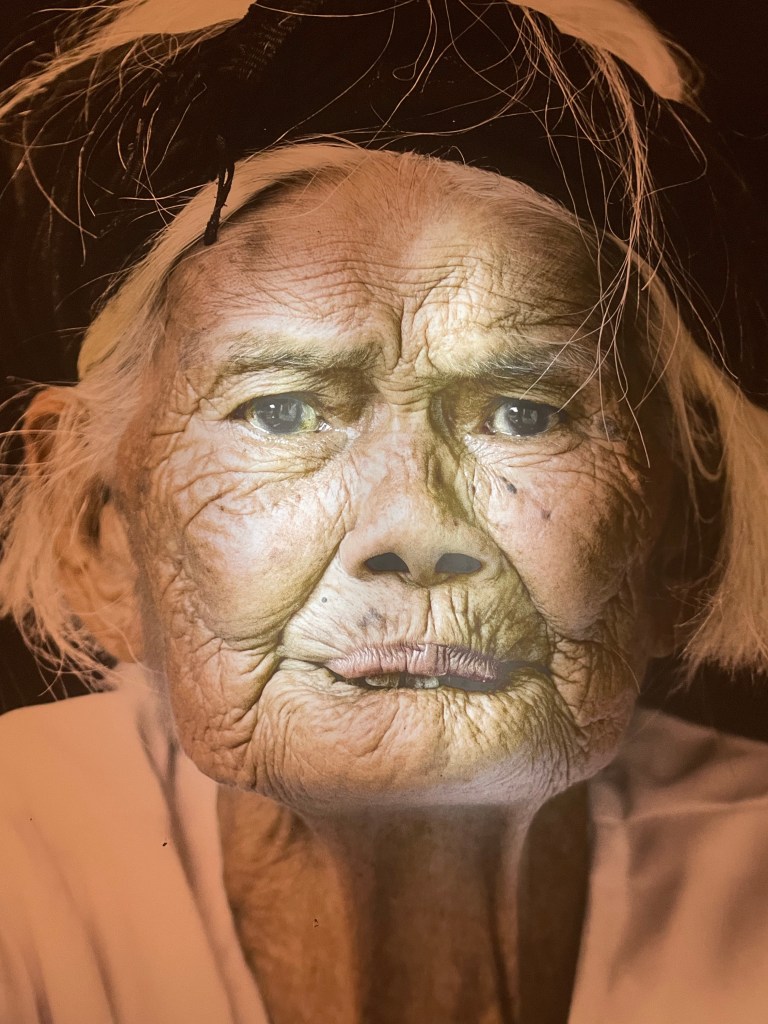
On the war back to the old town we went past the Rehahn Gallery, so decided to go inside. The gallery is home to the work of the renowned French photographer, Rehahn, who is based in Hoi An.
We could easily see why he’s so famous and successful, the photos were remarkable. The woman in the gallery also told us that there’s a larger museum, also in Hoi An, that tells the story of Rehahn’s work.
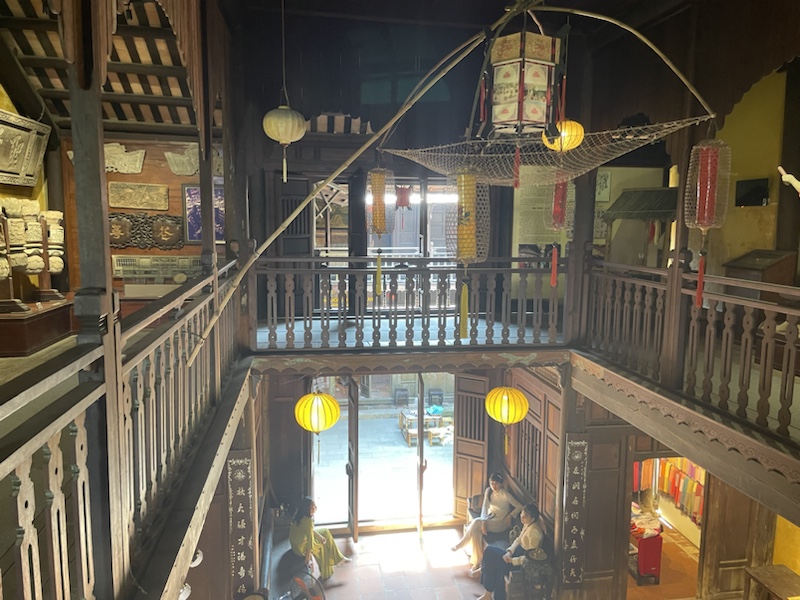
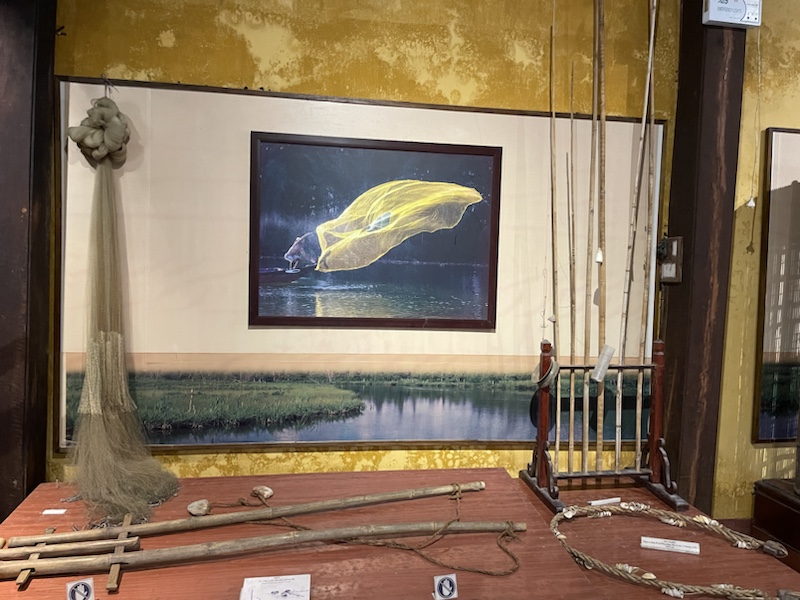
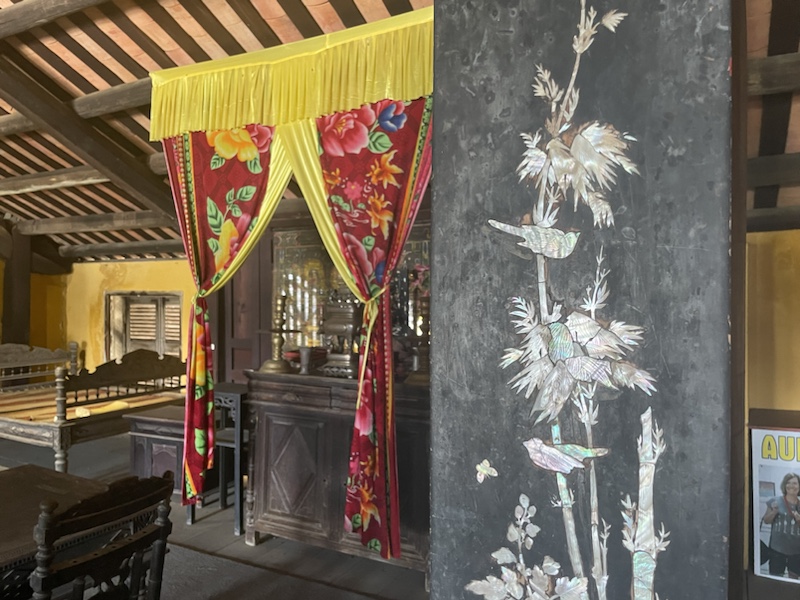
We used the first of our 5 tickets did the ancient town at the Museum of Folk Culture. The old building that houses the museum is fascinating to wander through, it’s a beautiful house. The museum itself is quite interesting, and the exhibits all focus on traditional crafts and culture, such as fishing, rice growing, and dance.
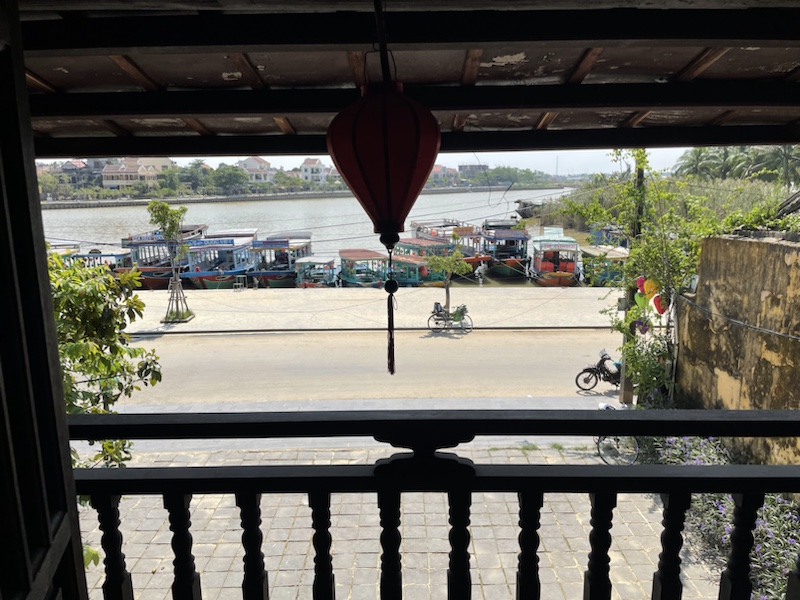
The streets of Hoi An were very picturesque, and much quieter than I was expecting. No vehicles are allowed in the old town, which immediately means it’s a lot more relaxed and peaceful, but there were also not that many pedestrians.
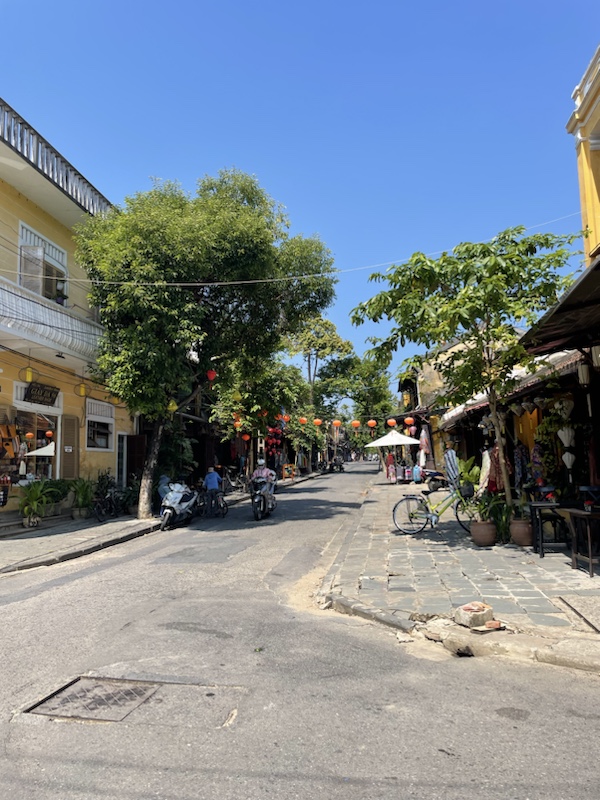
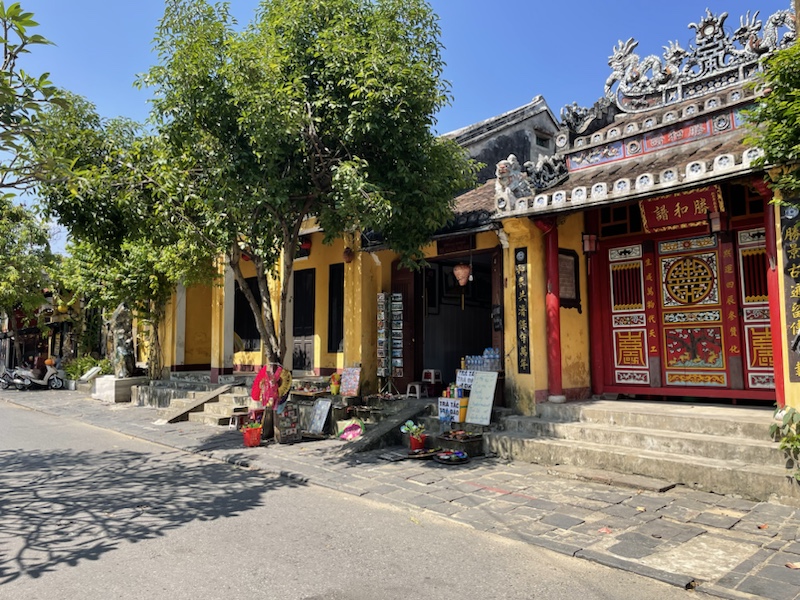
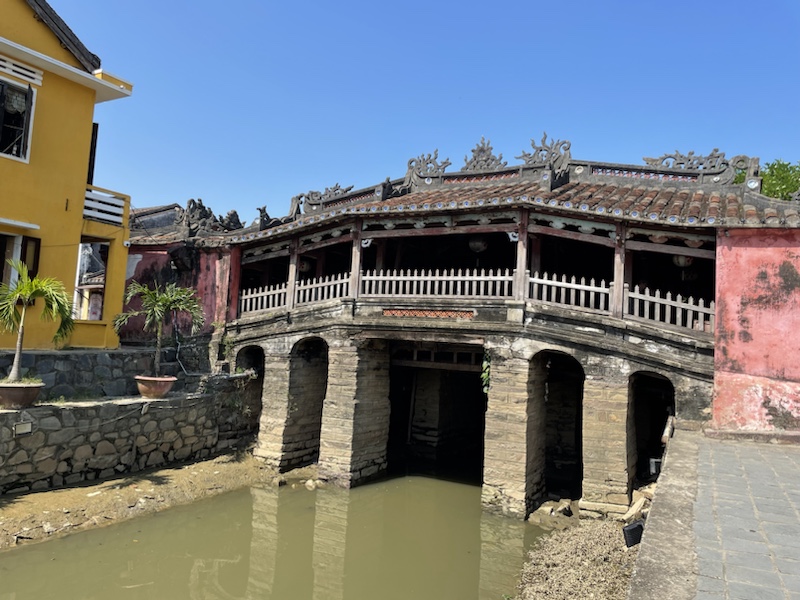
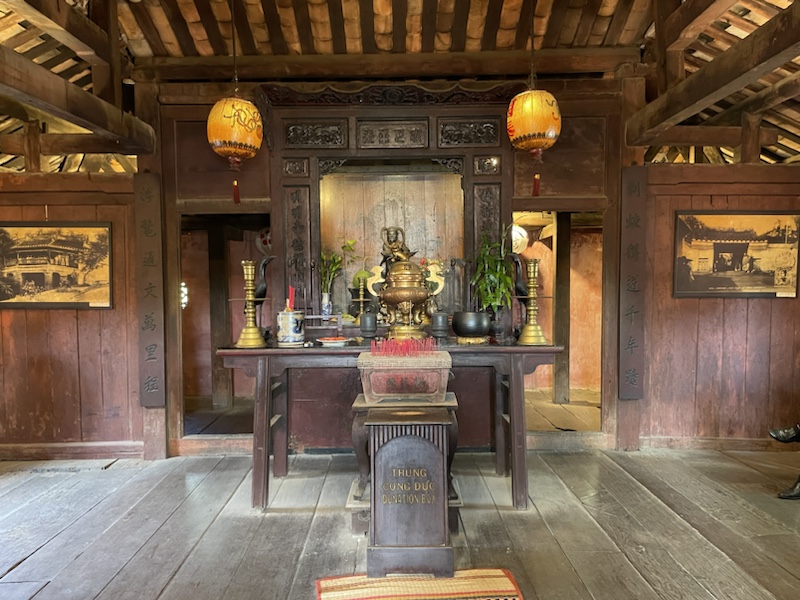
It was a very pleasant town to walk around, and we walked to the Japanese covered bridge. I was surprised to find a temple within the bridge.
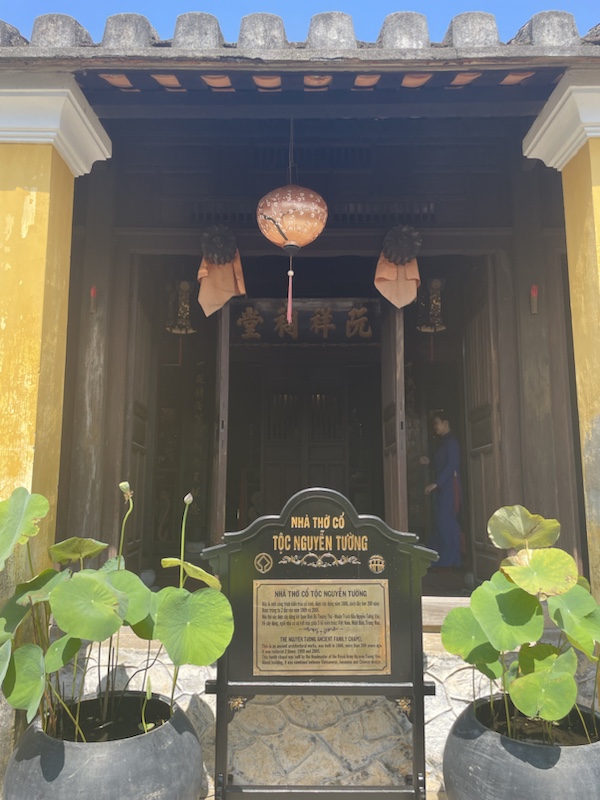
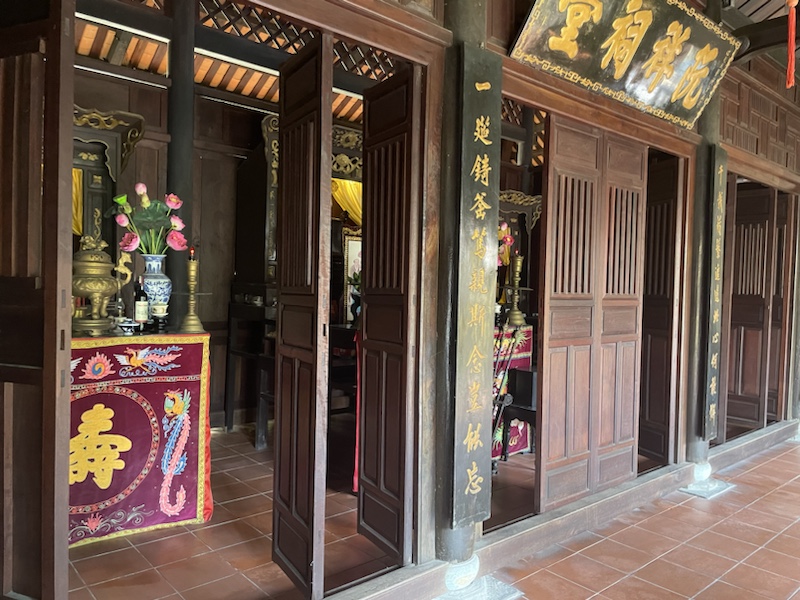
Our next sight was one of the private buildings, the Nguyen Tuong Family Chapel. This one had a little guided tour. It was a quite a small place, and even with the short tour it was probably one of the least interesting buildings we visited in Hoi An.
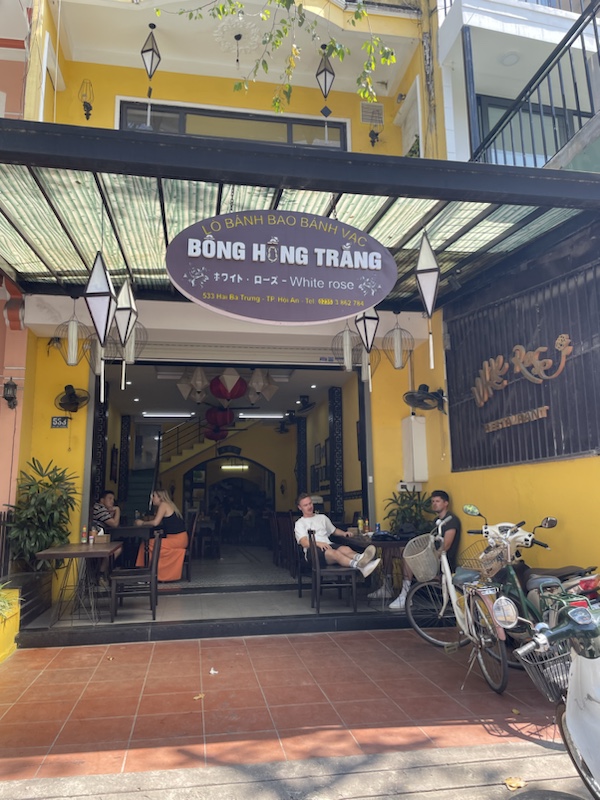
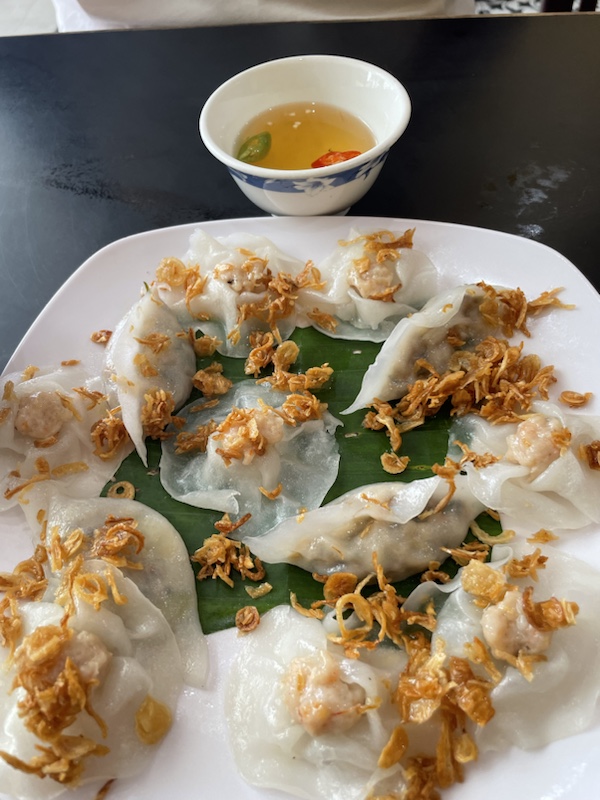
It was now time for lunch! We weren’t hugely hungry after our breakfast Bahn Mi’s, so just got a portion of White Rose dumplings to share. These dumplings are a specialty of Hoi An (in fact they’re unique to Hoi An) and we tried them at the original White Rose Restaurant. They were extremely good dumplings, especially with the crispy shallots that they’re topped with. If I ever find myself in Hoi An again, I’ll definitely be back.
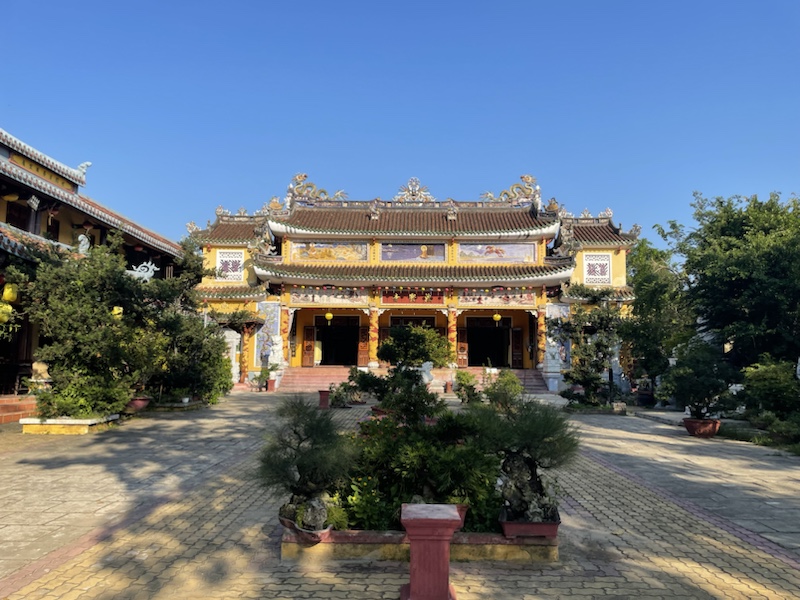
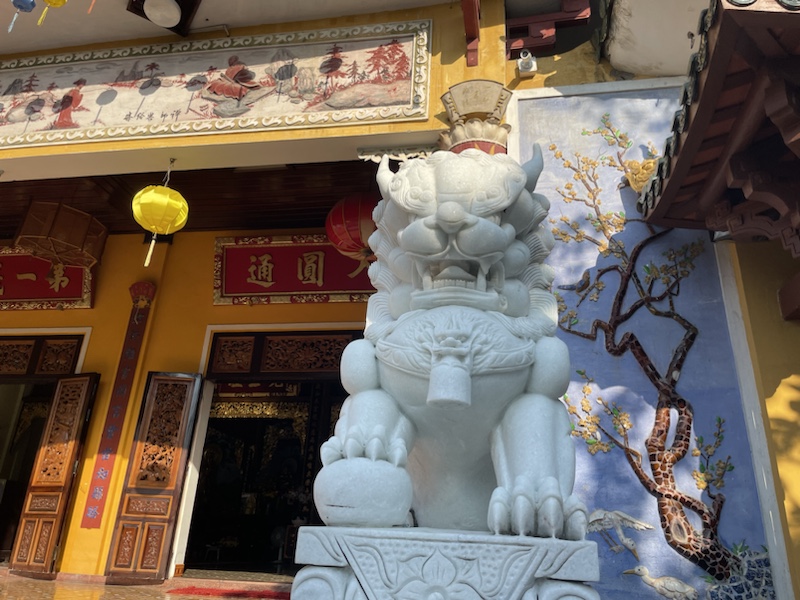
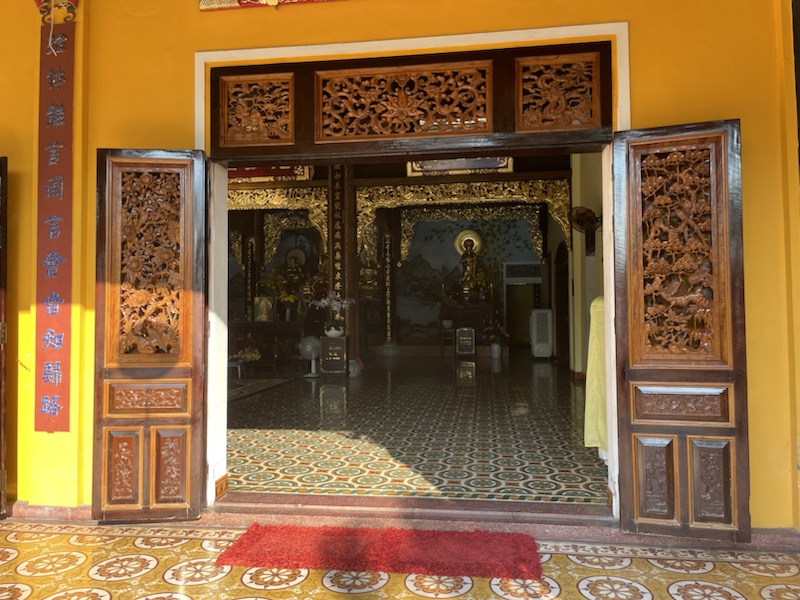
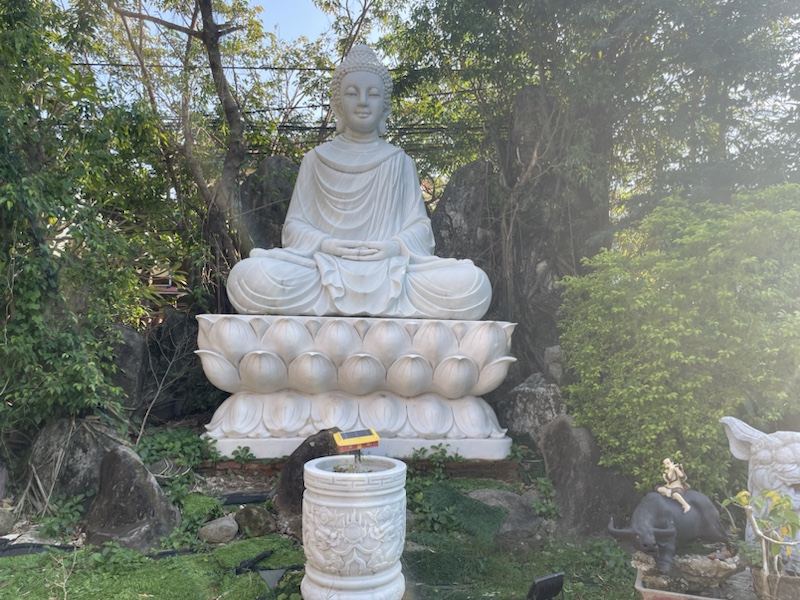
After lunch we went to our first communal building, Pháp Bảo Temple, (also known as Phac Hat Pagoda). It was a beautiful temple, set in pretty grounds with marble statues and fountains. As it’s an active Buddhist temple, we didn’t actually need to use one of our tickets to get in.
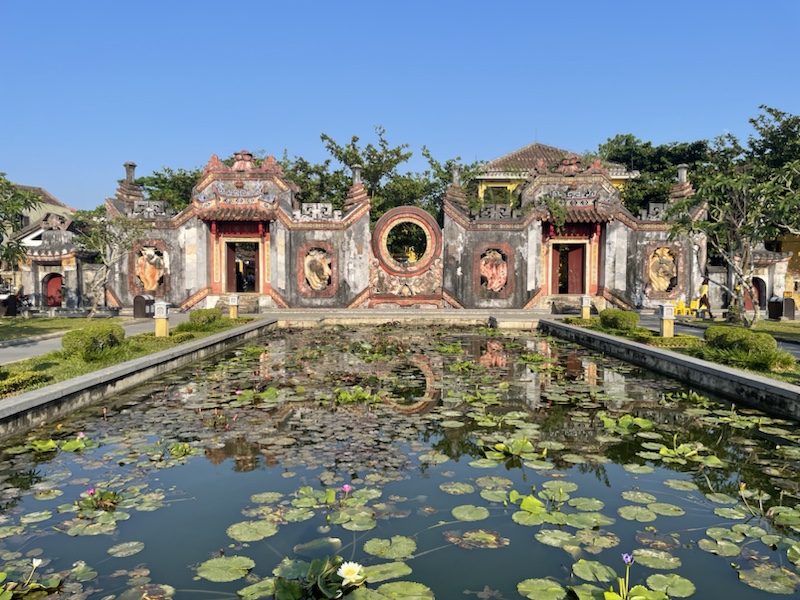
We then walked past the Ba Mu temple gate, which looked spectacular. We inside the gate, but the other side appeared to be some kind of school or something.
Back on the street outside, a huge procession of bicycle rickshaws went past – I assume they’re all part of some organised tour.
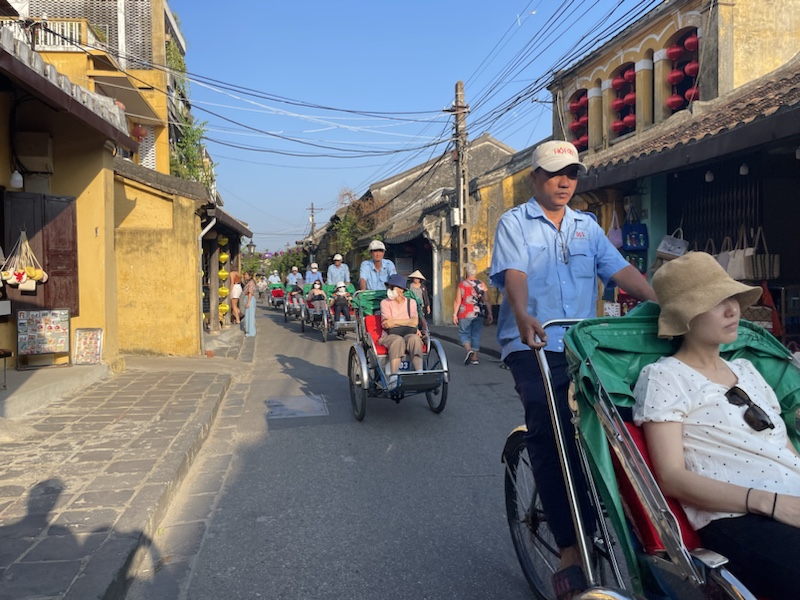
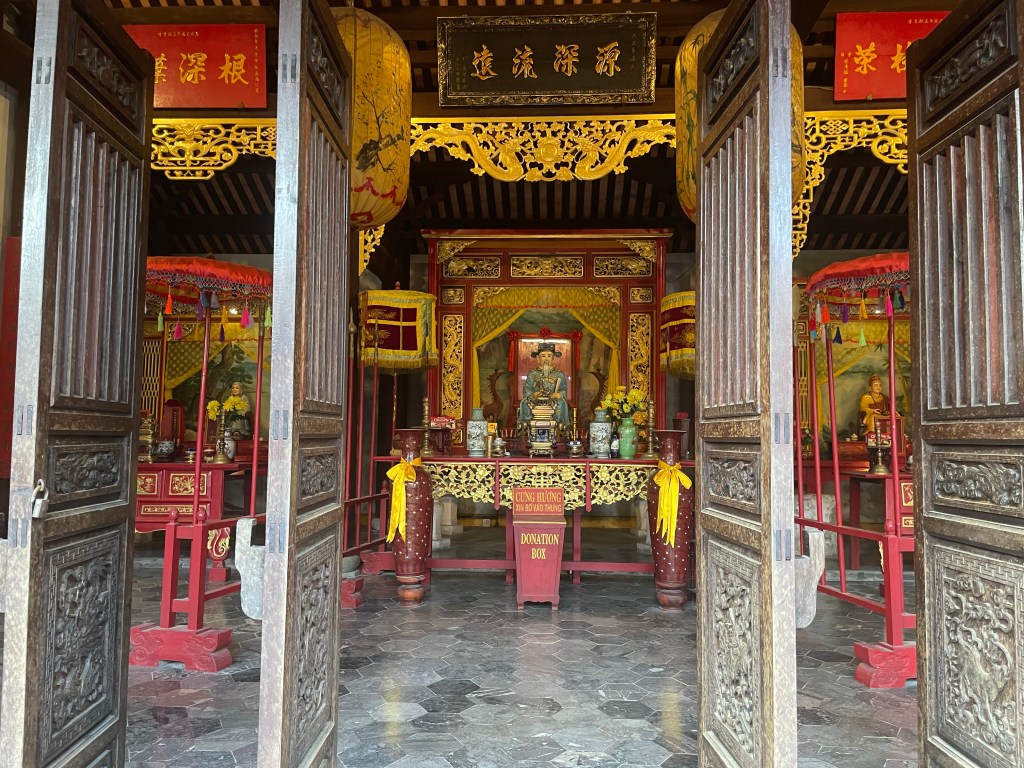
We then walked to Quan Cong Temple, a beautiful 17th century Chinese pagoda. It’s one of the more popular sights in Hoi An, and I can see why. I particularly liked the giant incense spirals suspended from the ceiling of the main building.
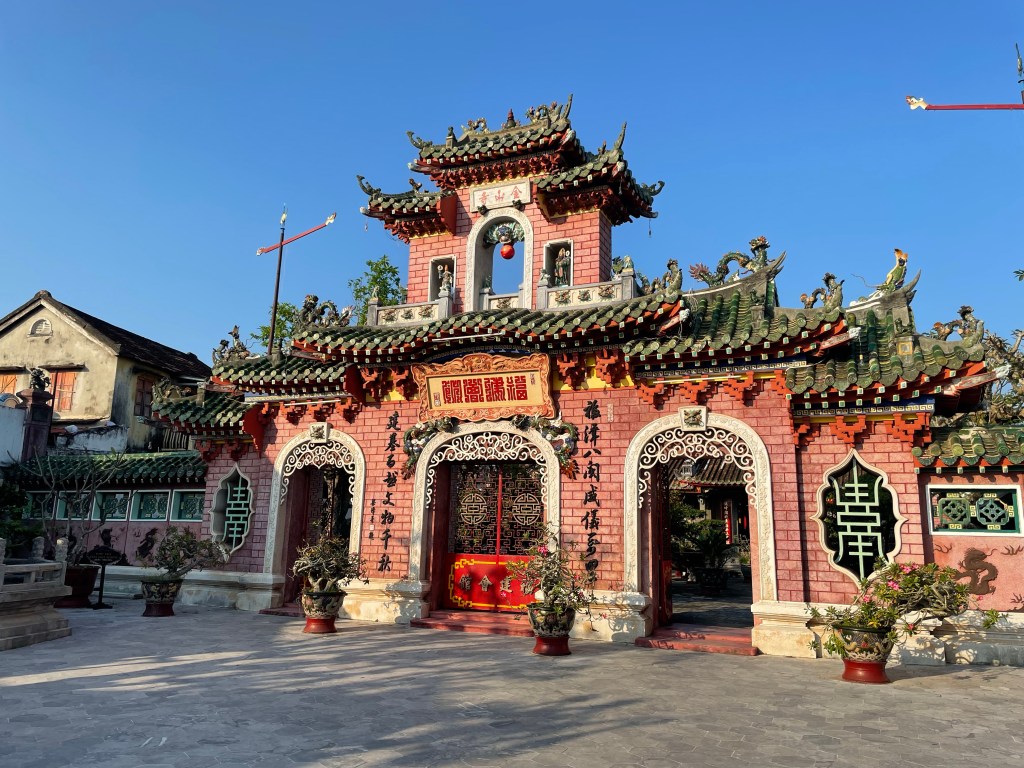
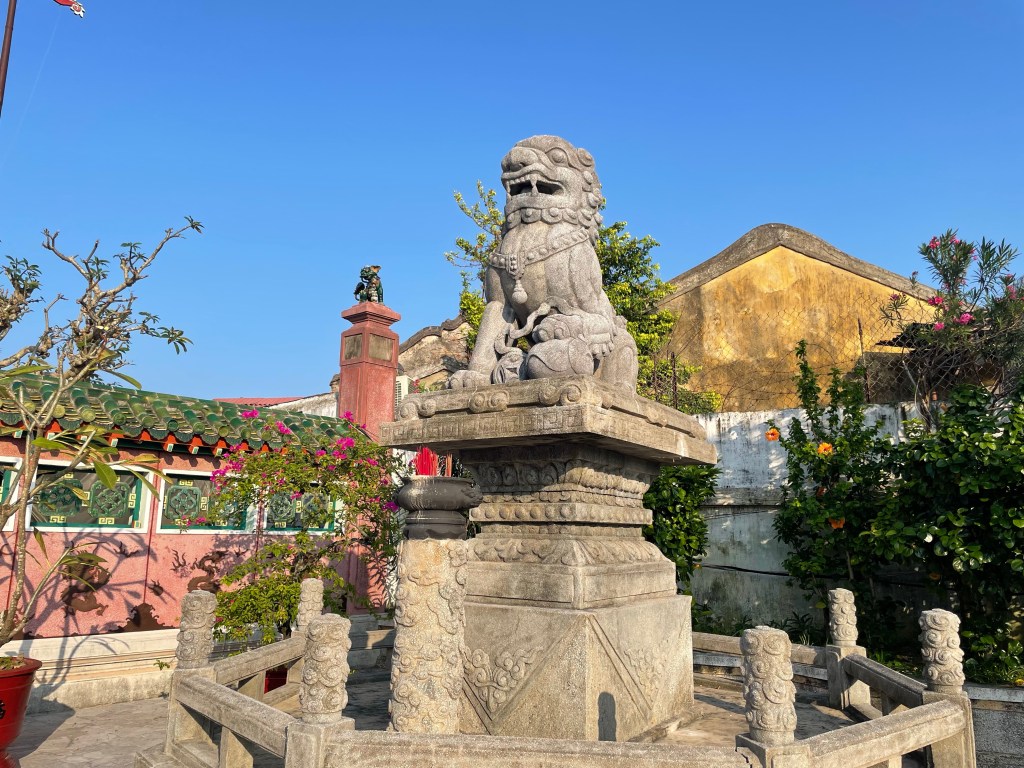
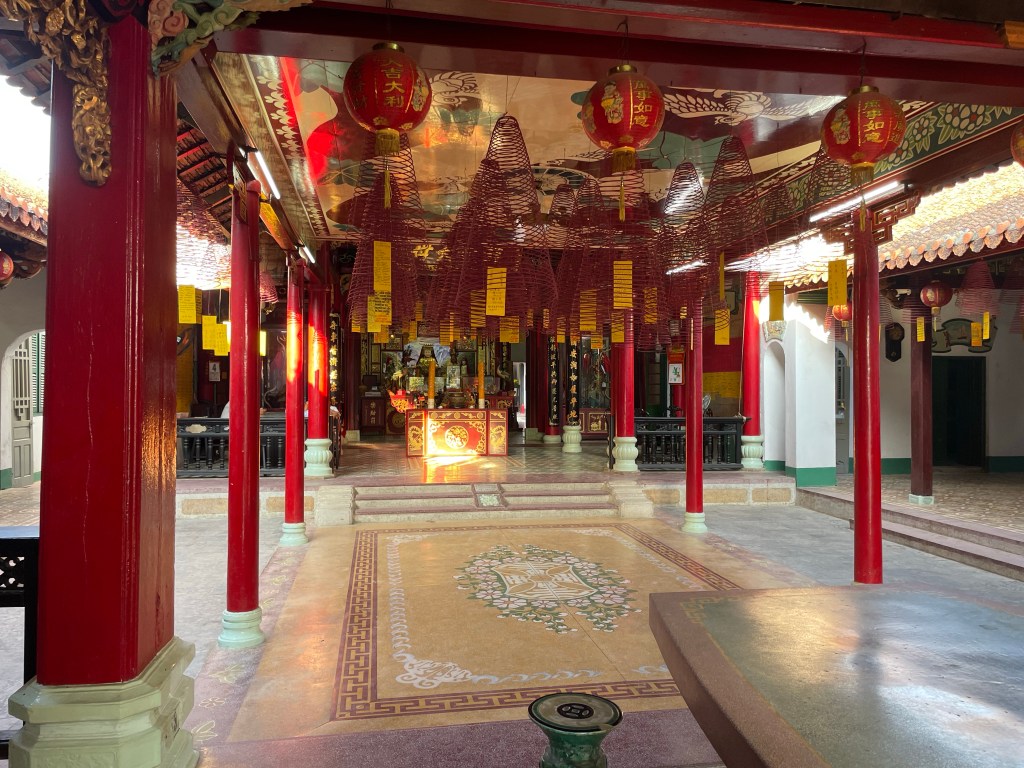
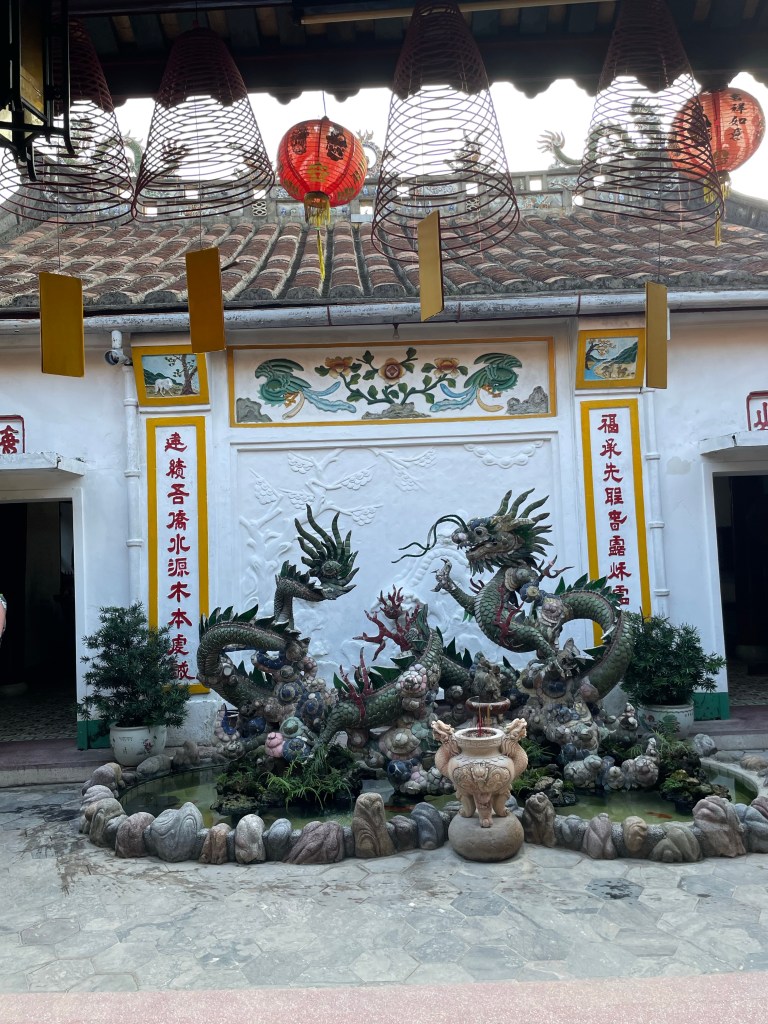
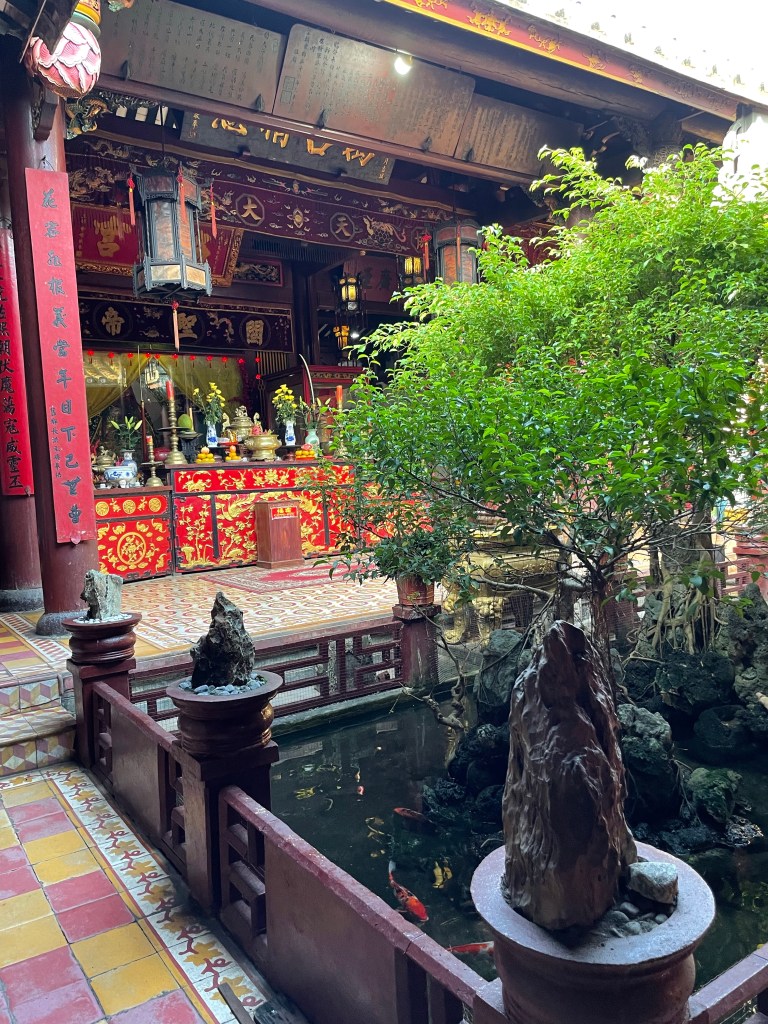
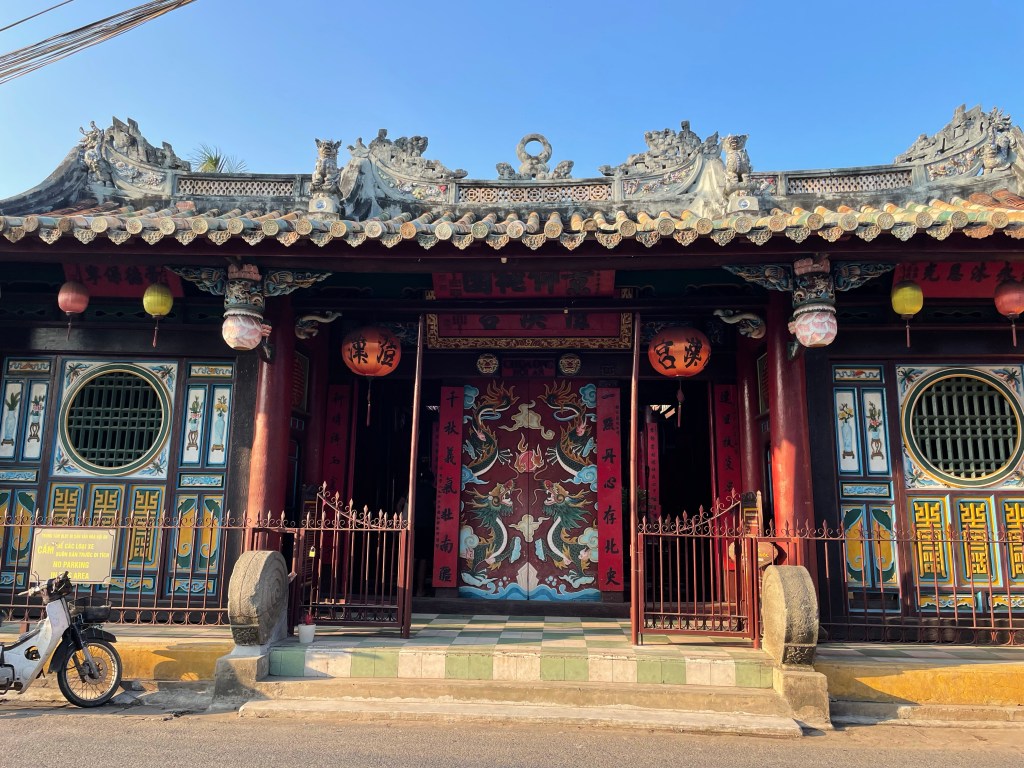
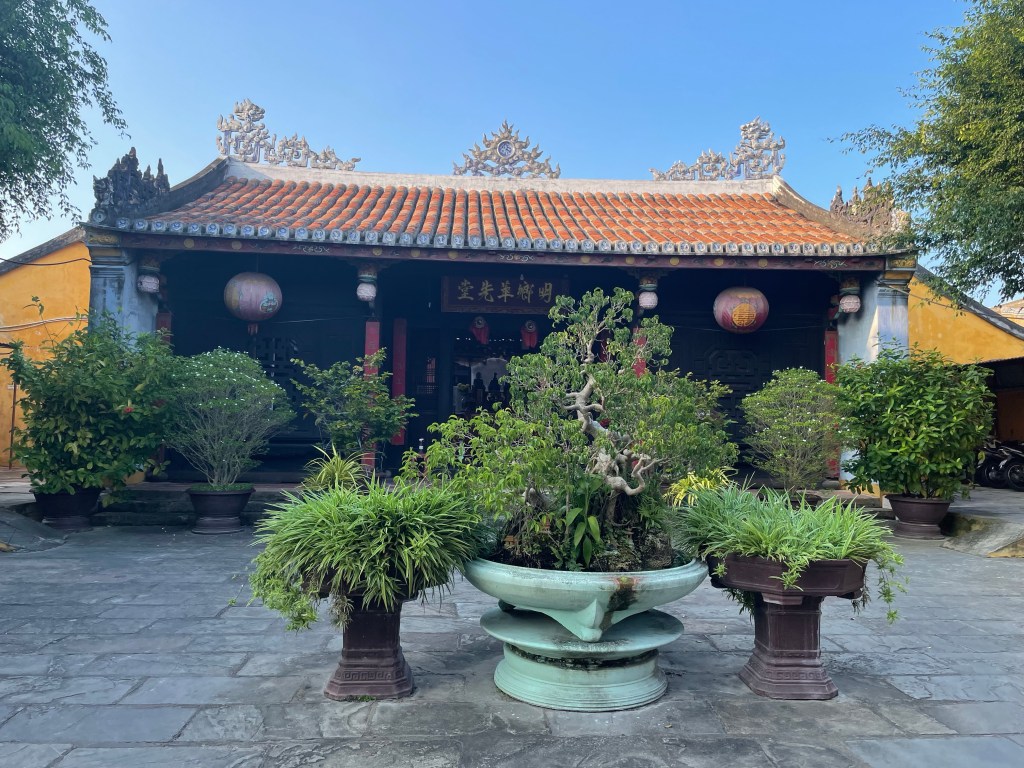
Our final ancient building was the Minh Huong communal house, another Chinese style temple.
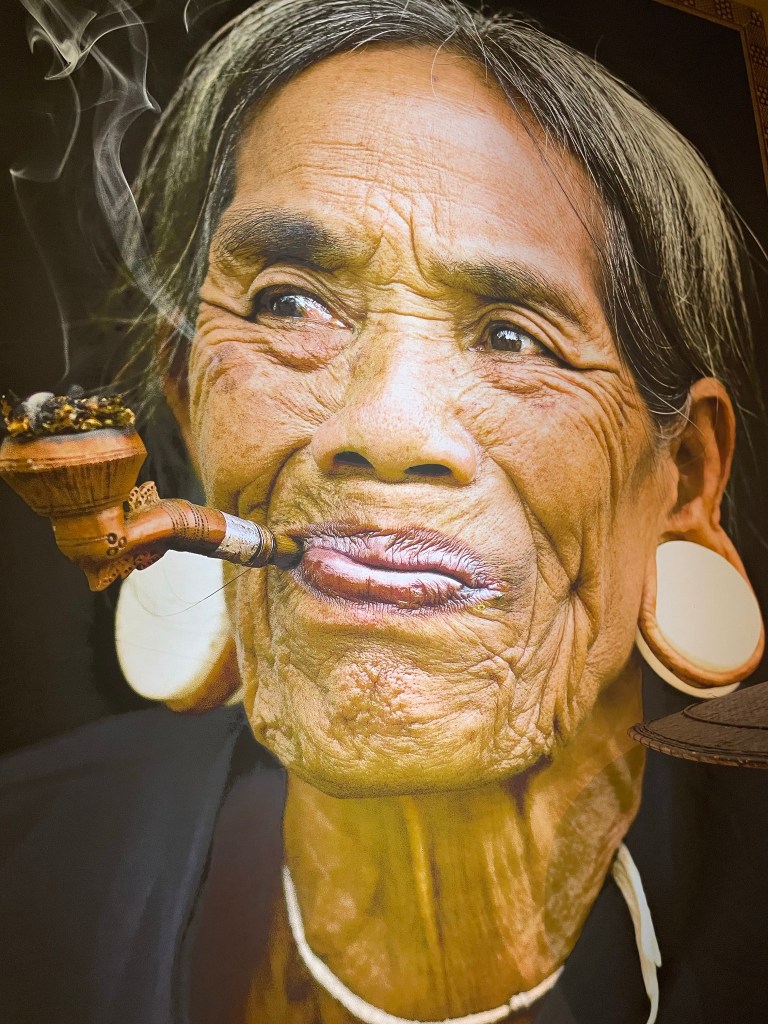
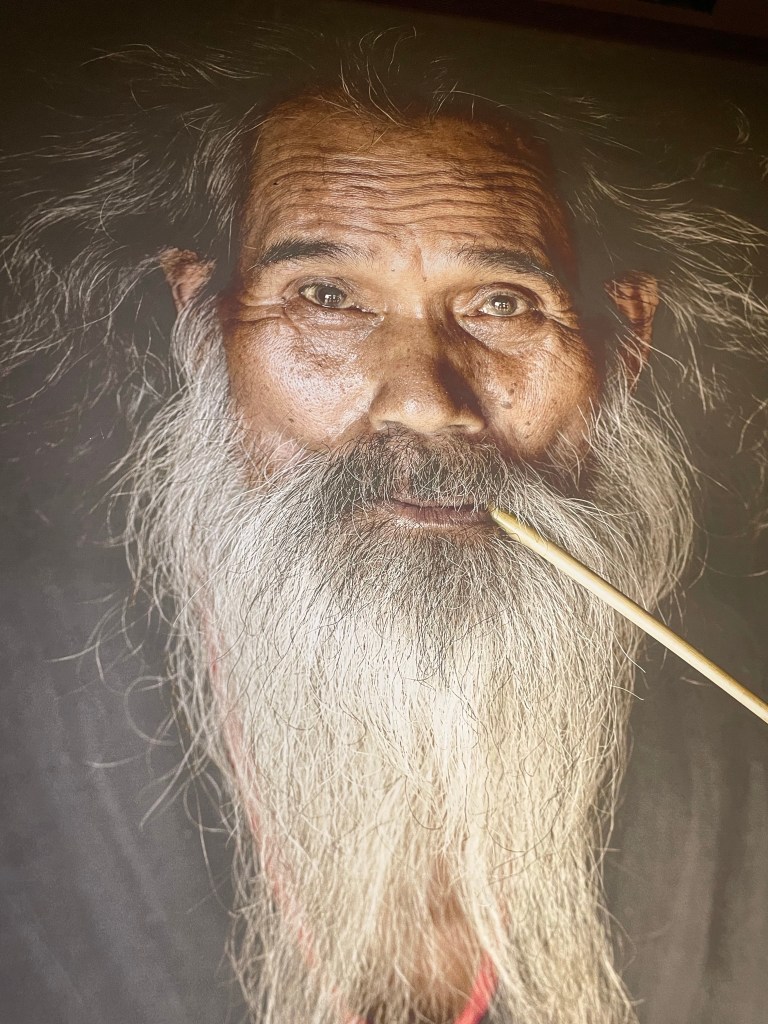
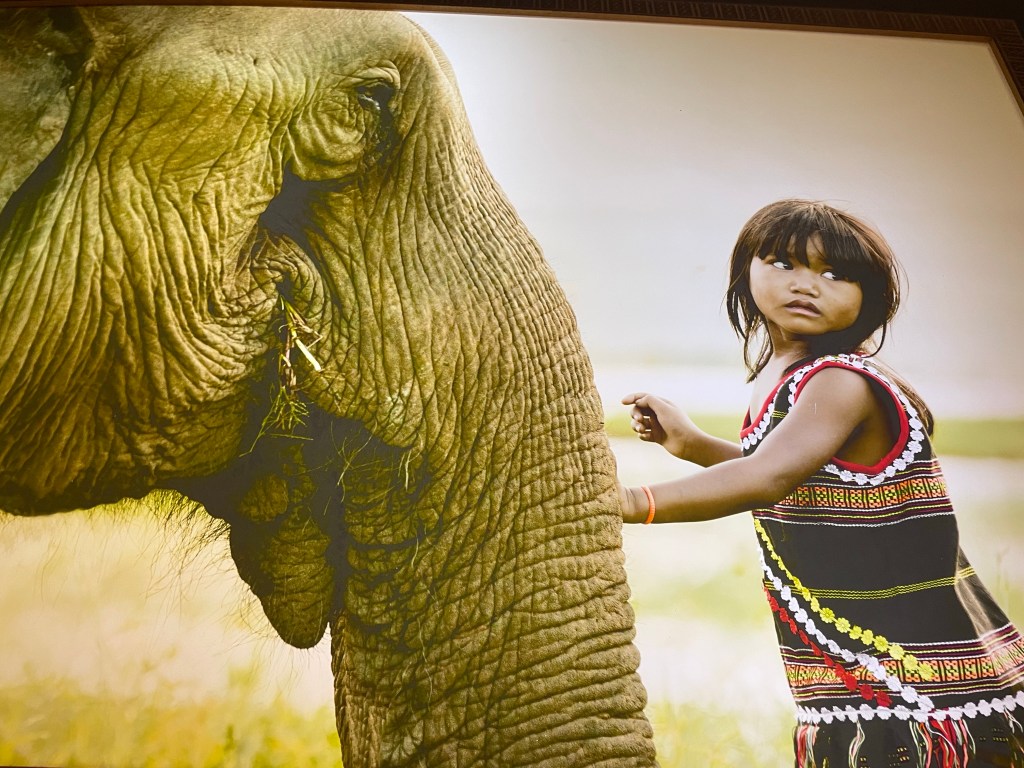
We had a quick break in a cafe, and grabbed a couple of beers, then went to the Precious Heritage Art Gallery Museum. This was the museum that the lady in the Rehahn Gallery had told us about. It’s a fascinating museum, which documents Rehahn’s quest to meet and photograph every tribe in Vietnam. Beneath each photograph in the museum is the traditional costume of the tribe, along with a written account (in English) of Rehahn’s experience of meeting them and taking the pictures.
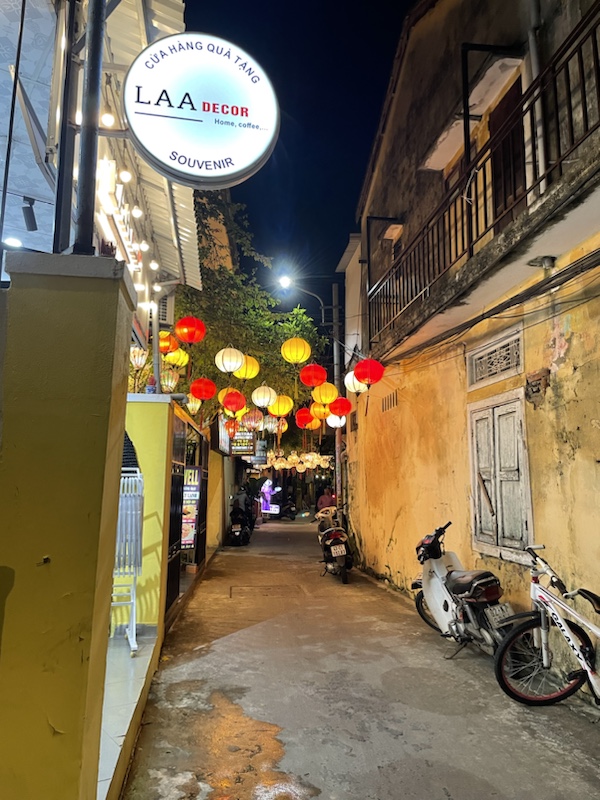
It was now evening, and the streets of Hoi An looked beautiful, with a lot of lit up lanterns adding some colour.
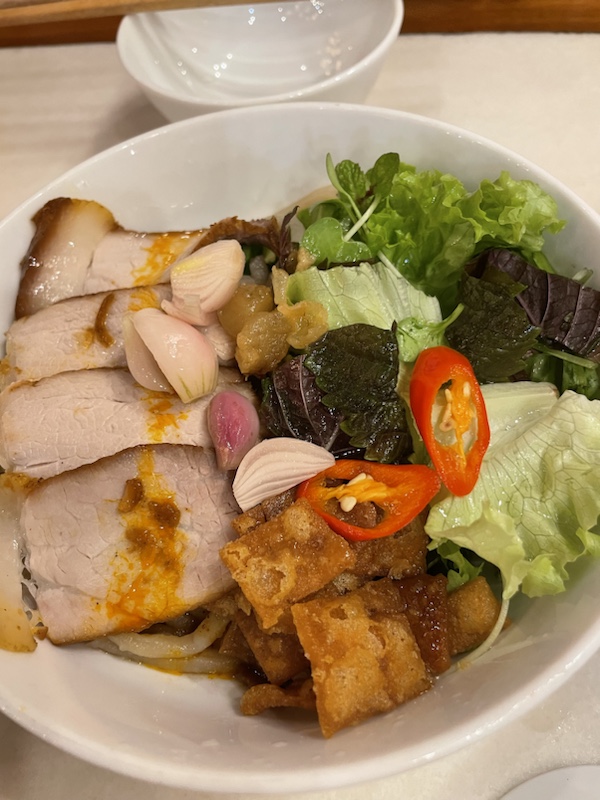
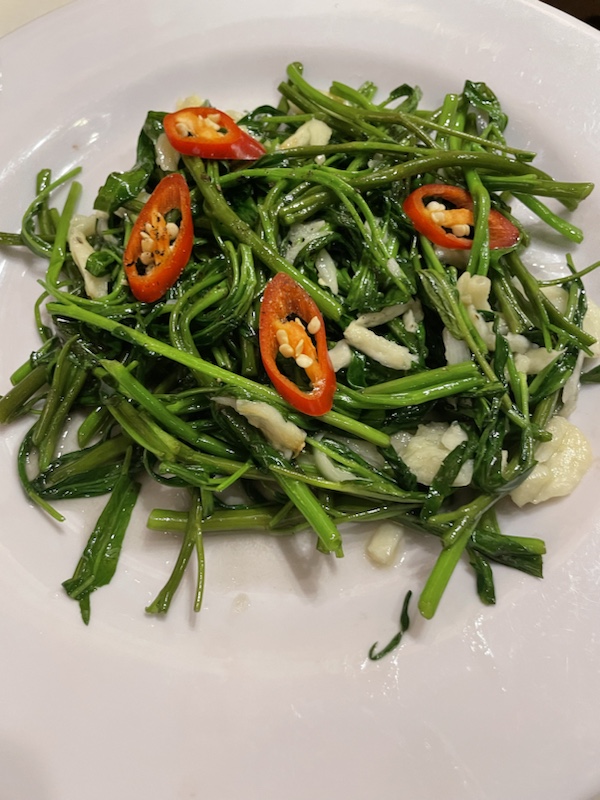
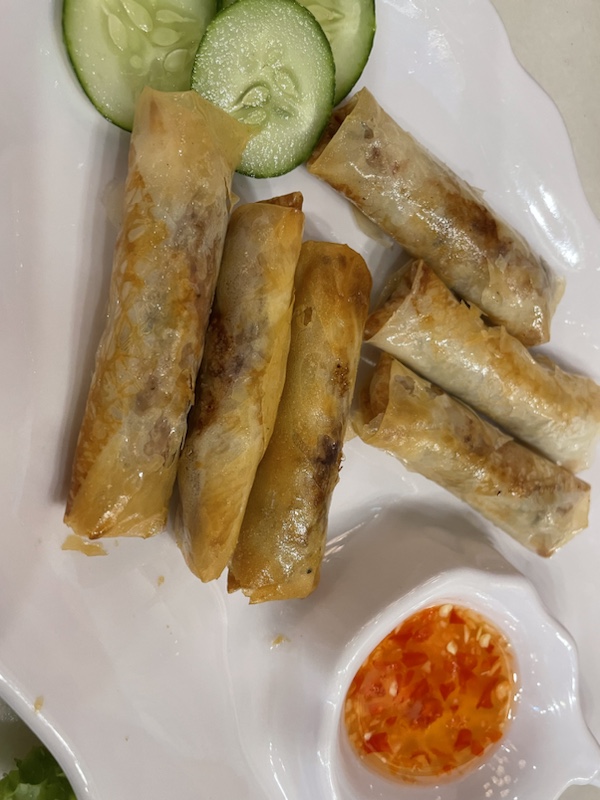
We ate dinner at Quán Cao lầu Bá Lễ, and ordered one bowl of Cau Lau (a Hoi An noodle dish), some wok fried morning glory, and some spring rolls to share between the two of us. The food was excellent, although I was expecting the noodles to taste more smoky (apparently they are made using wood ash)
It was now getting late, so we ordered a Grab Car back to our hotel in Da Nang.

 Emma and Pete’s Asian Adventure